

Stop Asking "Why Didn't They?" and Start Asking "What Happened?"
It's a busy day. You walk into the treatment area and notice the dental radiographs from this morning's procedure are still up on the workstation and they have not been transferred to the patient record. Your first thought? "Why didn't Sarah get that done? It would have taken two seconds!"
That thought feels reasonable. Almost justified. After all, uploading images is quick work, right?
Here is the thing. That single thought, repeated over and over throughout your day, is quietly poisoning your leadership, your team culture, and maybe even how you see the world.
The Two-Second Trap
Let's do some math. If uploading dental radiographs takes "two seconds," and so does wrapping the instrument pack, and calling that client back, and updating the whiteboard, and wiping down the exam table, and scanning that lab requisition, and refilling the autoclave, and about forty-seven other tiny tasks your team juggles between actual patient care... well, those seconds add up fast.
A typical vet tech might handle 200+ of these micro-tasks in a single shift. If each one truly takes two seconds (spoiler: they do not), that is still over six minutes of pure task-switching. But in reality? Each "two-second" task comes with context switching, interruption recovery, and the mental load of remembering it exists in the first place.
Research from the American Psychological Association shows that task-switching can reduce productivity by up to 40%. Your brain does not just pause and resume. It has to reload the entire context of what you were doing before, what you are doing now, and what comes next.
So when you think "It would have taken two seconds," you are missing about 90% of the story.
The Real Culprit: Fundamental Attribution Error
Psychologists have a name for what happens when we blame a person's character instead of their circumstances. It is called the Fundamental Attribution Error, and it is one of the most well-documented biases in social psychology.
Here is how it works: When someone else messes up, we assume it is because of who they are (lazy, careless, unmotivated). When we mess up, we blame the situation (too busy, unexpected emergency, unclear instructions).
Harvard Business Review calls this tendency one of the biggest barriers to effective leadership. When leaders default to character judgments, they stop problem-solving and start scorekeeping. You shift from "How do we fix this?" to "Who do I need to fix?"
And once you start seeing your team through that lens, it is almost impossible to stop.
How This Thinking Spreads
The scary part? This kind of thinking is contagious.
You start with one judgment: "Sarah should have uploaded those radiographs." Then it happens again tomorrow. And the next day. Pretty soon, you have mentally filed Sarah under "unreliable" or "needs to be micromanaged."
Now you are not just judging the missed task. You are judging every task Sarah touches. You are watching her differently. You are interpreting her actions through a lens of suspicion instead of trust.
Your other team members notice. They see you treat Sarah differently. They wonder if you are watching them the same way. Psychological safety, the foundation of high-performing teams, starts to crumble.
Before long, you are not leading a team. You are managing a group of people who are scared to make mistakes.
The Hidden Cost to You
Here is the part nobody talks about: this mindset does not just damage your team. It damages you.
When you default to "Why didn't they?" thinking, you are training your brain to look for failure. You start your day scanning for what went wrong instead of what went right. You become a detective of disappointment.
Over time, this changes your entire relationship with your job. You stop seeing possibility and start seeing problems. You stop feeling like a leader and start feeling like a referee. You stop enjoying the wins because you are too busy cataloging the losses.
And it bleeds into everything else. Your patience at home. Your tolerance for minor inconveniences. Your ability to give people (including yourself) the benefit of the doubt.
The Leadership Shift: Curiosity Over Judgment
So what is the alternative?
Instead of asking "Why didn't they get that done?", try asking "What happened?"
That tiny shift in language unlocks everything.
"What happened?" is an invitation to problem-solve. It assumes there is a story you do not know yet. It treats your team member as a reliable narrator of their own experience instead of a suspect in an investigation.
When you ask "What happened?", you might learn:
- The dental machine crashed mid-upload and the images had to be re-taken
- A critical patient emergency pulled Sarah away right when she was about to upload
- The file-naming system changed and Sarah was not sure which protocol to follow
- Sarah did upload them, but to the wrong patient file by accident
Suddenly, you are not dealing with a character flaw. You are dealing with a systems issue, a training gap, or just bad timing. All of which you can actually fix.
What This Looks Like in Practice
Let's replay that opening scenario with curiosity instead of judgment.
You notice the dental radiographs are not uploaded. Instead of stewing about it, you find Sarah.
"Hey, I noticed the rads from this morning are not in the file yet. What happened?"
Sarah looks relieved that you asked instead of assumed. "Oh man, yeah. I was about to upload them when we got that GDV in the door. I put them on the list to deal with after, but then Dr. Miller needed me in surgery and I completely forgot. I will get them up right now."
Two things just happened:
- You identified the real problem (interruption during a critical task, no backup system)
- Sarah feels safe telling you the truth
Now you can solve for the actual issue instead of the imagined one.
Three Questions Every Leader Should Ask
If you want to shift from judgment to curiosity, try replacing your automatic reactions with these three questions:
1. What obstacles might I not be seeing?
This forces you to look beyond the individual and examine the system. Are there structural issues making tasks harder than they need to be?
2. What would I assume if I trusted this person completely?
This reframes the situation. If you genuinely believed Sarah was competent and trying her best, what explanation would make sense?
3. What story am I telling myself, and is it the only possible story?
Our brains love narratives. But the first story we tell ourselves is rarely the most accurate one.
The Ripple Effect
When you lead with curiosity instead of judgment, everything changes.
Your team stops hiding mistakes and starts reporting them early (when they are easier to fix). They stop wasting energy managing your perception of them and start putting that energy into actual problem-solving. They trust you to have their back, so they take smarter risks and innovate faster.
You stop being the bottleneck and start being the coach.
And maybe most importantly: you start enjoying your job again. Because you are not spending all day prosecuting a case against people you actually care about.
Building a Culture of Curiosity
This is not about being soft or lowering standards. It is about being effective.
The best leaders do not assume incompetence. They assume complexity. They know that if a good person is consistently struggling with a task, the task is the problem, not the person.
This is the kind of thinking we are all about. Building workplaces where people feel seen, supported, and trusted to do their best work. Where "two seconds" is recognized for the myth it is. Where leaders ask better questions and teams feel safe answering them honestly.
Because culture is not just about the big moments. It is about the small ones. The tiny decisions you make fifty times a day about how you interpret someone else's actions.
Those decisions add up. Make sure they are adding up to something good.
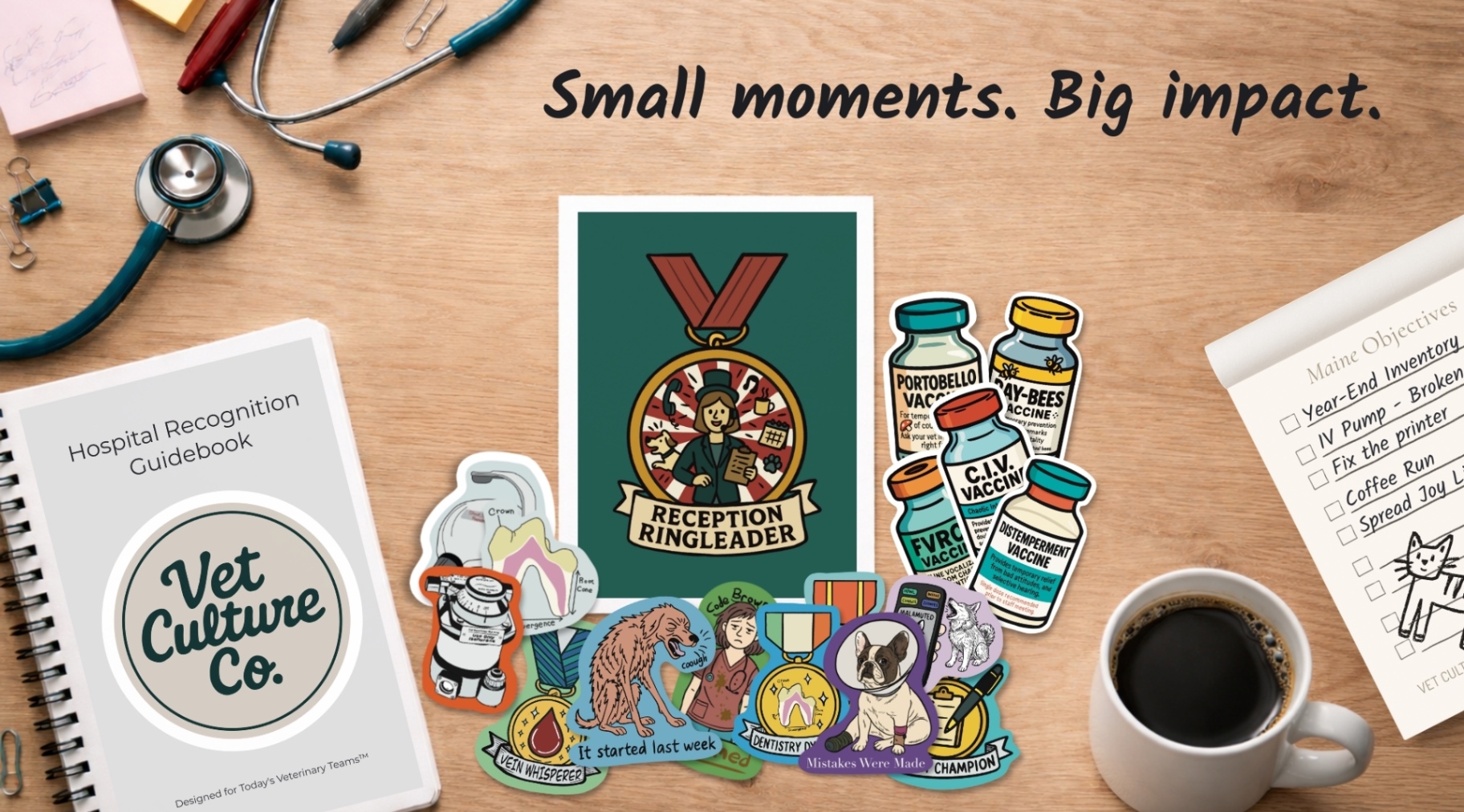
Want to build curiosity and recognition into the rhythm of your clinic? The Hospital Recognition Guidebook gives you the system, and our recognition cards and notes make it easy to tell your team specifically what you see.
Tags: Leadership, Team Culture, Veterinary Management, Psychological Safety, Communication Skills, Workplace Culture, Vet Med Leadership, Management Tips, Team Building, Curiosity Over Judgment