

The ROI of a Thank You: Why Your Clinic is Hemorrhaging Techs (and How to Stop It)
Let's talk about something that keeps practice managers up at night: watching talented techs walk out the door.
You know the drill. You spend months training someone. They finally hit their stride, nailing IV placements, calming anxious pet parents, becoming the person everyone relies on during chaotic surgery days. And then... they hand in their notice.
It's not just frustrating. It's expensive. And here's the thing, it's often preventable.
The Numbers That Should Make You Nervous
Here's a stat that hits hard: over 50% of veterinarians report experiencing burnout. But it's not just DVMs feeling the heat. Nearly 60% of veterinary technicians have considered leaving the profession entirely.
Let that sink in. More than half of your tech team is one bad week away from updating their resume.
The reasons aren't surprising if you've spent any time in a busy clinic. Long hours. Emotional exhaustion from difficult cases and euthanasias. The physical toll of restraining 80-pound dogs and cleaning up after anxious cats. And underlying all of it? A feeling that nobody notices how hard they're working.
When your team feels invisible, they start looking for the exit.
The True Cost of "Just Hiring Someone New"
Here's where most clinic owners get it wrong. They see turnover as an inconvenience, a few weeks of being short-staffed, some interview time, maybe a signing bonus for the new hire.
But the real math tells a different story.
Replacing a single veterinary team member costs between 50% and 200% of their annual salary. For most clinics, that translates to somewhere between $20,000 and $80,000 per lost employee.
Where does that money go? Let's break it down:
- Recruiting costs: Job postings, recruiter fees, time spent reviewing applications
- Interview time: Hours pulled away from patient care and revenue-generating activities
- Training investment: The months it takes for someone new to reach full productivity
- Overtime expenses: Covering shifts while you're short-staffed
- Lost institutional knowledge: That tech who left? They knew exactly how Dr. Martinez likes her surgery packs arranged
- Team morale hit: Remaining staff get burned out covering extra work, making them more likely to leave too
It's a vicious cycle. And most clinics are stuck in it without realizing how much it's actually costing them.
The Recognition Gap (And Why Pizza Parties Aren't Cutting It)
So why do people leave? Sure, pay matters. Career advancement matters. But research consistently shows that feeling valued and recognized is one of the biggest factors in whether someone stays or goes.
The problem? Most clinics are terrible at recognition.
Not because managers don't care, they do. It's because recognition feels like one more thing on an already overwhelming to-do list. When you're juggling emergencies, client complaints, and staffing shortages, writing a heartfelt thank-you note drops to the bottom of the priority list.
And when recognition does happen, it's often the wrong kind. The annual pizza party. The generic "great job, team!" in a staff meeting. The employee-of-the-month plaque that eventually feels meaningless.
Here's what the research tells us: effective recognition needs to be specific, timely, and personal. "Thanks for staying late to comfort that family during their cat's euthanasia" hits different than "good work this week."
The Math That Actually Makes Sense
Now for the good news. Ready?
Organizations with strong recognition programs see 31% lower voluntary turnover.
Let that number do the work for a second. If you're losing 3-4 techs a year at $30,000+ replacement cost each, that's $90,000-$120,000 walking out your door annually. Cut that by nearly a third? You're looking at serious savings.
And here's the kicker: implementing a meaningful recognition program costs a fraction of what turnover does.
We're talking about $2,000 to $5,000 annually for tools, resources, and systems that actually work, compared to potentially six figures in turnover costs.
That's not just good ROI. That's a no-brainer.
Why "Random Acts of Appreciation" Don't Work
Here's where a lot of well-meaning managers get stuck. They'll go through phases, super motivated to recognize their team for a few weeks, then it fades as the daily chaos takes over.
Sound familiar? 🎉
The secret isn't trying harder. It's building systems that make recognition sustainable.
Think about it this way: you don't rely on "random acts of inventory management" to keep your clinic stocked. You have systems. Checklists. Scheduled orders. Recognition needs the same structure.
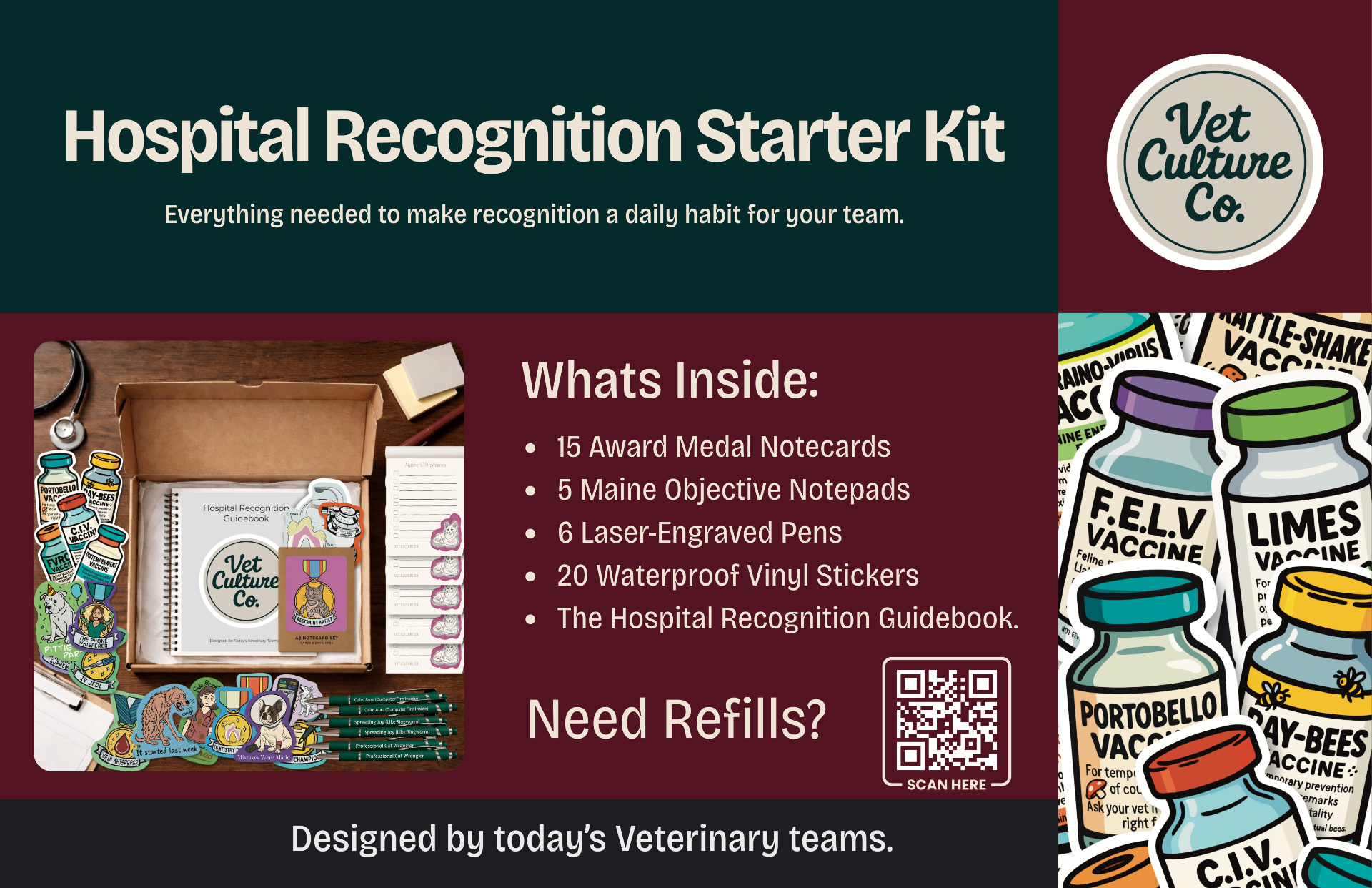
That's exactly why we created the Hospital Recognition Guidebook, to give practice managers a actual framework instead of just good intentions.
Building Recognition Into Your Clinic's DNA
So what does sustainable recognition actually look like? Here are some principles from the guidebook that work:
Make It Specific
"Great job" is forgettable. "The way you calmed down that nervous Labrador during his blood draw, that's exactly the kind of patient care that makes us different" sticks with someone.
Make It Timely
Recognition loses power the longer you wait. Catching someone doing something great and acknowledging it in the moment creates a much stronger connection than bringing it up at their annual review.
Make It Personal
Not everyone wants public praise. Some team members light up when you recognize them in a staff meeting. Others would rather receive a quiet, handwritten note. Knowing your team's preferences makes your recognition actually land.
Make It Consistent
This is the big one. Sporadic recognition feels random and can even breed resentment ("Why did SHE get recognized and I didn't?"). Consistent systems, like scheduled weekly check-ins or milestone celebrations, create a culture where appreciation is just how things work.
Getting Started Without Overwhelming Yourself
If you're reading this thinking "okay, but I barely have time to eat lunch," don't worry. You don't need to overhaul everything overnight.
Start small. Seriously.
One approach from the guidebook that works: commit to writing just two specific thank-you notes per week. That's it. Two notes. Takes maybe 15 minutes total.
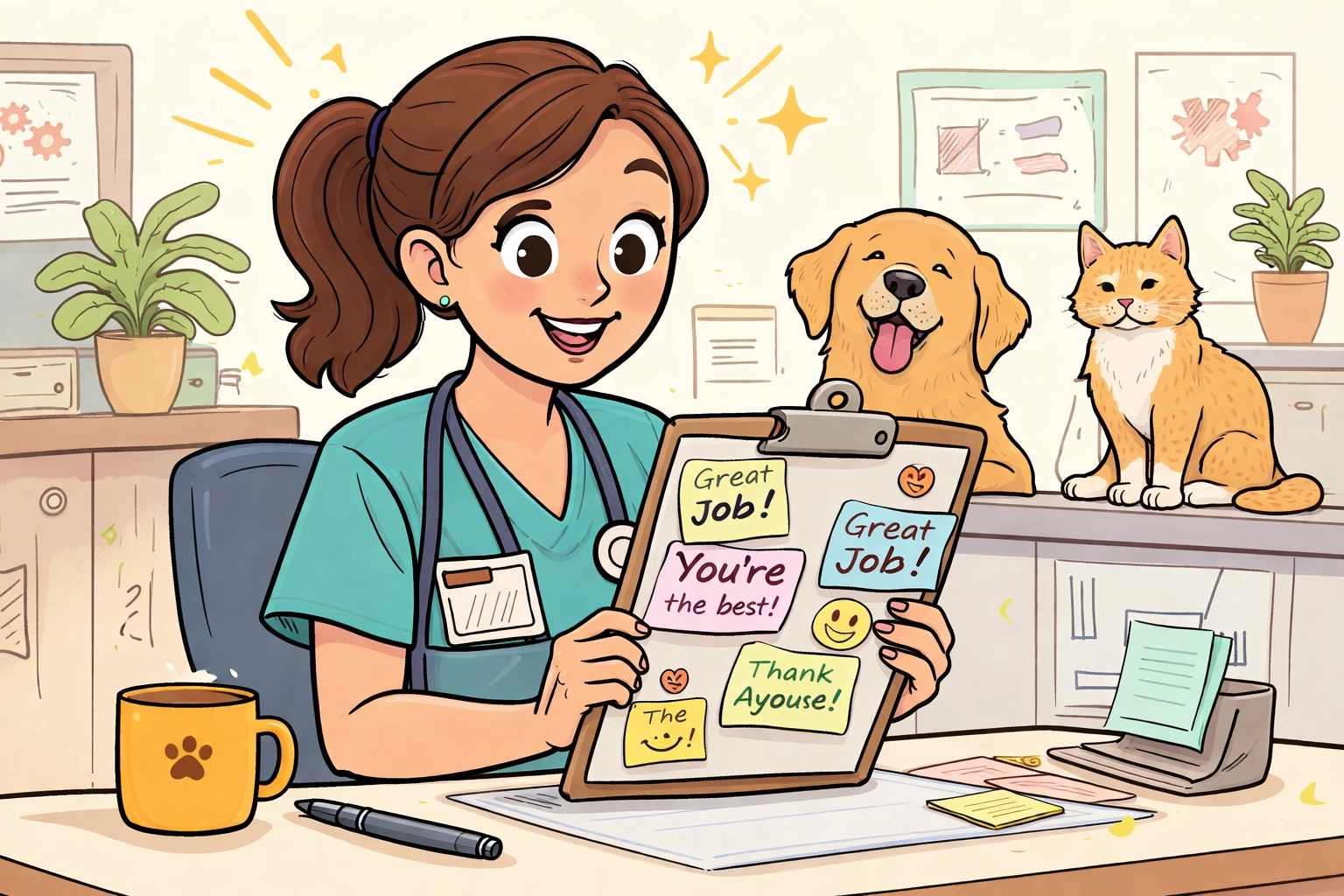
Do that consistently for a year and you've delivered 104 meaningful moments of recognition to your team. That's culture change, one sticky note at a time. (Here is the full habit, broken down step by step: Two Notes Tuesday.)
The Hospital Recognition Starter Pack was designed exactly for this: giving you the physical tools (notecards, stickers, the whole guidebook) to make recognition easy and actually fun. No more staring at a blank card wondering what to write.
The Bottom Line
Your clinic is probably spending way more on turnover than you realize. And while you can't control everything that makes vet med hard: the emotional cases, the long hours, the difficult clients: you CAN control whether your team feels seen and valued.
Recognition isn't soft. It's strategic. It's the difference between constantly backfilling positions and building a team that actually wants to stay.
The ROI is clear: invest a few thousand dollars in recognition systems, or keep hemorrhaging tens of thousands in turnover costs.
Your techs are worth more than a pizza party. And your clinic's future depends on treating them that way.
Ready to stop the revolving door? Check out our Staff Bundles designed specifically for veterinary teams who deserve better. Small moments, big impact. 🎉
Want to put this into practice? The Hospital Recognition Guidebook walks through the full system, and veterinary recognition cards and team bundles give you the tools to make recognition specific and consistent.
Related from the Vet Culture Brief
- Two Notes Tuesday: The 15-Minute Weekly Habit That Prevents Veterinary Burnout: the simple weekly system that turns recognition into a habit that sticks.
- The First 90 Days: Why Onboarding Recognition is Your Best Retention Strategy: stop turnover before it starts by recognizing new hires from day one.